Pilates and Movement Justice: Honoring the Legacy of Joseph Pilates, Kathy Stanford Grant, and Lolita San Miguel
By Amanda Knights-Shi, Director of Research & Evaluation
Pilates is often marketed today as a boutique wellness practice – it’s associated with sleek studios, reformer machines, and luxury prices. But the origins of the method tell a very different story. Developed in conditions of confinement and late shaped by innovators committed to accessibility, Pilates began as a system meant to restore dignity, health, and agency to the body. When we look at the history and work of pioneers like Joseph Pilates, a German immigrant, Kathy Stanford Grant, an African American dancer and choreographer, and Lolita San Miguel, a Puerto Rican dancer and artistic director, we find deep connections to social access and community wellbeing.
Creation “Contrology” by Joseph Pilates
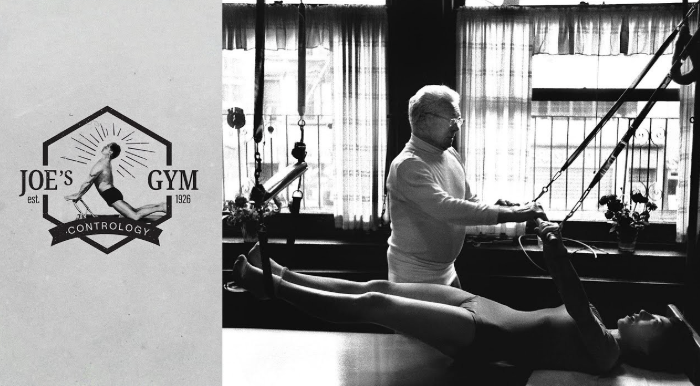
Pilates first began as “Contrology”, emphasizing the integration of the mind, body, and breath through deliberate movement. “Contrology” was a system developed by Joseph Pilates, a Germany physical trainer who is credited for developing the method during World War I while interned in a detention camp in England. There, he began teaching fellow detainees exercises designed to maintain physical and mental health despite confinement. He also improvised resistance equipment by attaching springs to hospital beds to help injured patients exercise – this became an early precursor to the modern reformer apparatus.
In 1926, Joseph Pilates immigrated to the U.S. and opened a studio with his wife Clara in New York City. Located in a building with dance companies, it attracted injured dancers seeking rehabilitation. As word spread through the performing arts community, Pilates became a respected figure in injury prevention and recovery. During this time, renowned dancers Kathy Stanford Grant and Lolita San Miguel learned of his work.
Rising Popularity of Pilates in the United States led by Kathy Stanford Grant and Lolita San Miguel
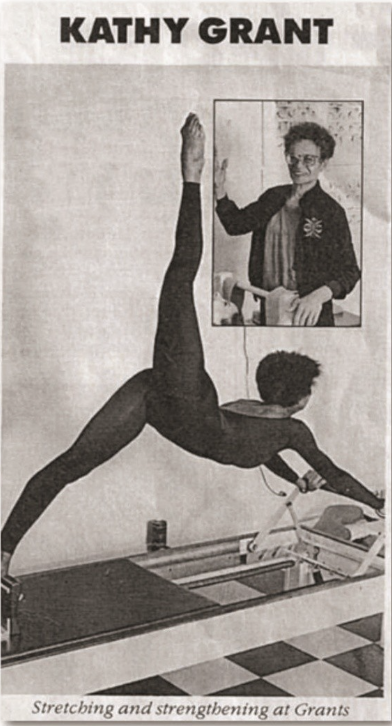
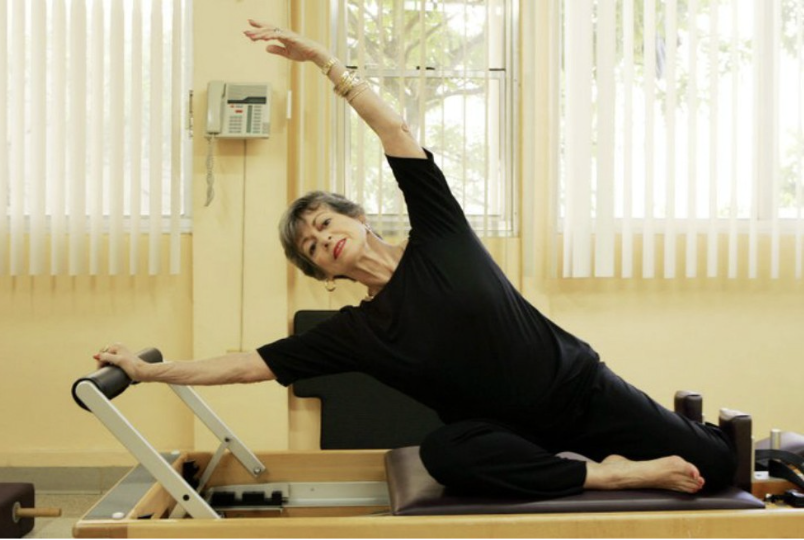
In the 1950s, both Kathy Stanford Grant and Lolita San Miguel were introduced to Pilates through knee injury rehabilitation, with Grant working directly with Joseph Pilates, and San Miguel through his student Carola Strauss Trier. They went on to train under Joseph Pilates himself, completing rigorous apprenticeships (over 2,000 hours), and became the only two he personally certified to teach the method, later known as the “Pilates Elders.”
Grant and San Miguel’s work highlights a broader history of access within Pilates, showing that its legacy is not just about techniques or studio lineages, but about who carries the method forward and who can benefit from it. Grant expanded Pilates through public institutions, emphasizing accessibility, adaptability, and education to reach more diverse communities, while San Miguel extended its reach internationally through teacher training and dance institutions. Together, their approaches reflect Joseph Pilates’ belief that movement should foster strength, autonomy, and resilience for all. Their histories also reveal that access to Pilates has never been neutral. Both women navigated cultural and institutional barriers, reminding us that who gets to teach, learn, and benefit from movement practices is shaped by broader social systems.
Reclaiming Pilates as a Public Practice
In recent decades, Pilates has often been framed as a luxury wellness practice. Yet the stories of Grant and San Miguel complicate that narrative. Grant’s commitment to inclusive teaching environments and San Miguel’s global training initiatives both reflect a broader understanding of movement as a form of health equity. Their work echoes Joseph Pilates’ early experiments in environments of confinement, where movement served as a tool for survival, rehabilitation, and dignity.
Reconsidering Pilates through this historical lens opens new possibilities for how the practice might be used today – particularly in accessible community spaces and spaces where bodily autonomy is constrained, such as hospitals, rehabilitation programs, and prisons. Pilates did not begin as a boutique fitness trend. It began as a system designed to restore the body’s capacity for strength and control under difficult circumstances; it is about bodily autonomy. By going back to the root of Pilates and honoring the legacy of teachers like Joseph Pilates, Kathy Stanford Grant, and Lolita San Miguel, modern Pilates can evolve to re-center movement as an accessible form of medicine.
Connection to Tubman Health
For Tubman Health, this history is not just informative – it is guiding. It reinforces a commitment to movement as a form of accessible care, not a luxury product. It also challenges us to think critically about how wellness practices are distributed today, and how they might better serve communities that have historically been excluded. By returning to these roots and honoring the legacy of Joseph Pilates, Kathy Stanford Grant, and Lolita San Miguel, Pilates can continue to evolve – not just as exercise, but as an accessible form of medicine grounded in dignity, equity, care, and accessibility.